
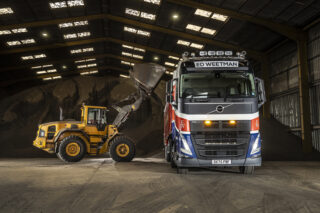
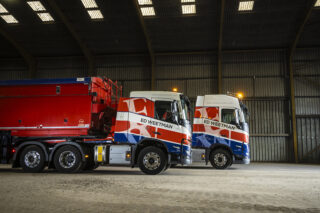
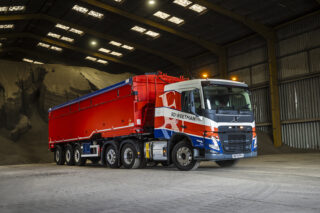
ED WEETMAN HAS BEEN A FIXTURE IN THE ANIMAL FEED TRANSPORT SECTOR FOR NEARLY 60 YEARS NOW, PROVIDING THE OLD-FASHIONED SERVICE ETHICS CUSTOMERS WANT WITH A MODERN FLEET OF TRUCKS AND TRAILERS THAT MEET THE HIGHEST STANDARDS.
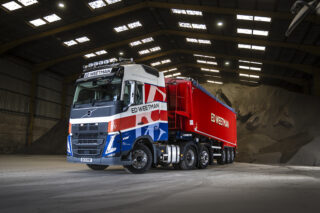
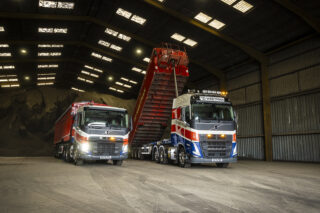
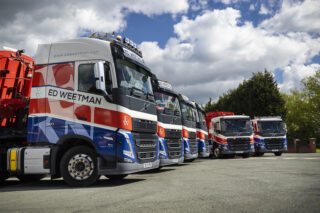
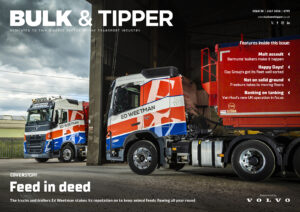
For a company to stay in business for nearly 60 years, it has to move with the times, and that is certainly the case at animal feed haulage and storage specialist Ed Weetman (Haulage & Storage), whose truck fleet has seen six new Volvo trucks – four FHs and two FMs – join its ranks over the past nine months.
Decked out in Ed Weetman’s smart white, red and blue livery, the new trucks are a mix of fleet renewals and expansion. “We’re trying to get into a programme where we buy six vehicles and three to four trailers every year, so the fleet stays up-to-date,” says Andrew Bailey, operations director at the firm. While the new additions are all Volvos, it is another Swedish marque that makes up most of the 30-strong fleet.
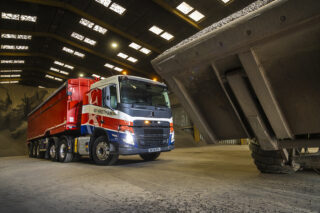
BOTH INTERNAL COMBUSTION AND ELECTRIC POWER ARE MOVING FORWARD FAST AT VOLVO, AS A RECENT EVENT IN GOTHENBURG DEMONSTRATED.
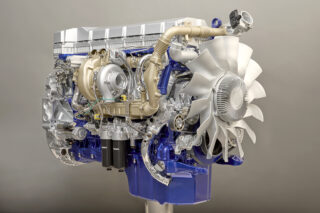
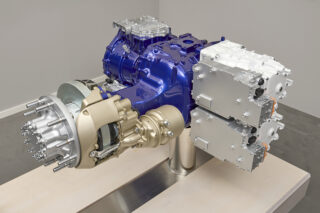
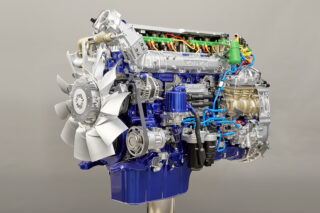
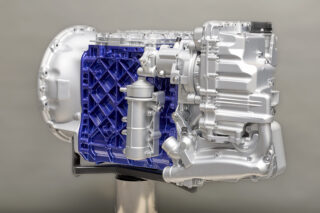
Volvo Trucks recently launched two all-new 13-litre engines, one diesel and the other gas-powered, and has promised to introduce a hydrogen-powered version of this design before 2030. At a launch event in Gothenburg, it also showcased its latest battery-electric vehicles (BEVs), offering greatly extended ranges and higher gross vehicle weights than previous BEVs. The truck maker also said that hydrogen fuel cell versions were undergoing testing and would be launched in 2030.
The new D13 engine replaces the current 13-litre Volvo unit fitted to the FH, FM and FMX models and the 11-litre engine in the FM and FMX ranges. While Volvo is investing heavily in battery-electric and hydrogen fuel cell drivelines, the introduction of the new diesel and gas-powered range shows that it believes internal combustion engines will remain at large for decades to come. The outgoing D13, in single turbocharger and turbo-compound form, has earned a reputation for good fuel consumption, particularly when combined with the wind-cheating FH Aero cab range.
With 116 pages of first-class niche transport content, what more could you wish for? Click the appropriate link below to purchase your annual subscription, or an individual copy.
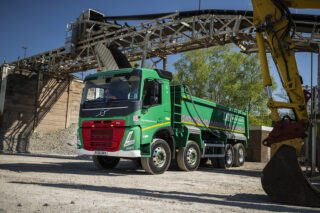
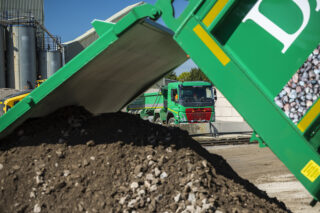
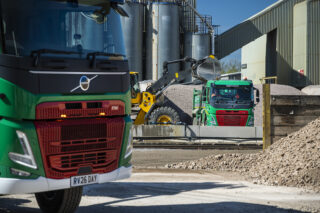
BULK & TIPPER CAST THEIR EYE OVER THE EXTENSIVE FLEET OF RIGID, ARTICULATED AND DRAWBAR VEHICLES THAT SUPPORT FAMILY-RUN DAY GROUP'S WIDE-RANGING HAULAGE AND RECYCLING OPERATION.
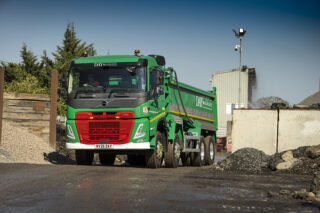
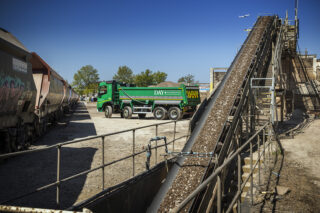
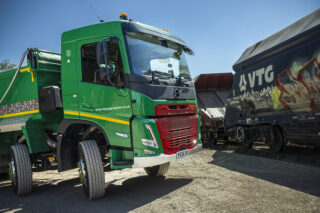
The green livery of the Day Group is a familiar sight on the roads in the southern half of the country. Its rigid and articulated tippers, along with dropside and curtainside drawbar and articulated combinations, support aggregate supplies, site clearance and muckaway, specialist material supplies, waste processing and recycling activities for the group’s own divisions and third-party customers.
With a fleet of around 250 vehicles at depots throughout the south-east, along the south coast and into the West Country, and many regular subcontractors, managing the operation is obviously a complex task, and one that has constantly evolved as the group has diversified.
Still family-owned, the operation goes back to 1947, when the late John Day formed Day and Sons (Hanworth), based in West London, as a coal merchant and haulier. It began by delivering bulk coal in tippers to London’s power stations.
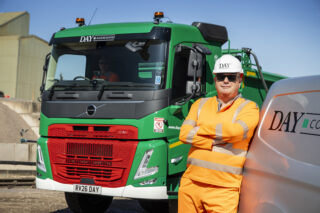
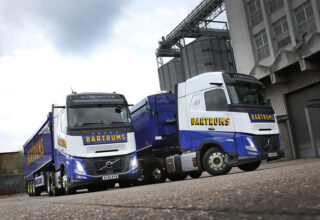
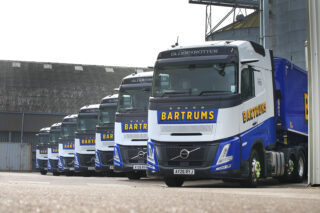
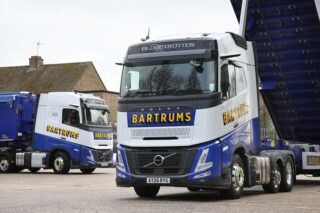
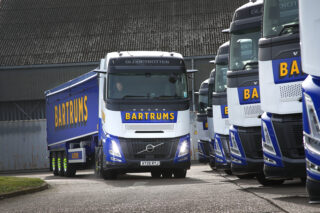
TRANSPORTING MALT IS ONE OF THE MAIN ACTIVITIES FOR SUFFOLK-BASED BARTUMS' BULK FLEET, AND ITS TRUCKS AND TRAILERS DELIVER THIS VITAL BARLEY-DERIVED INGREDIENT ALL OVER THE UK.
It’s in the beer you drink, the breakfast cereal you eat, and probably in your favourite sweet treat and warm, soothing, bedtime brew too. We’re talking about malt – and there is every chance that the malt contained in these and umpteen other edibles you consume was transported in the back of one of Bartrum Group’s bulk trailers.
Transporting malt produced by one of East Anglia’s many maltsters to food and drink producers is one of the key activities of the Eye, Suffolk-based family-owned transport business. Founded in 1929 and also engaged in pallet deliveries (it’s a member of the Pallet-Track network) and general haulage, its bulk work keeps 33 trucks busy on routes all over the country.
Malt is made from barley, and the flatlands of East Anglia are a major producer of the crop. Unlike transporting sugar beet, which is seasonal, moving malt is a steady, year-round activity, explains Bartrums Haulage and Storage operations director, Tremayne Johnson.
With 116 pages of first-class niche transport content, what more could you wish for? Click the appropriate link below to purchase your annual subscription, or an individual copy.
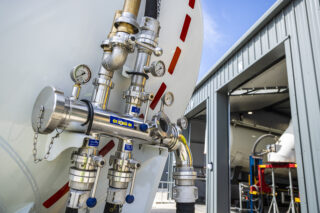
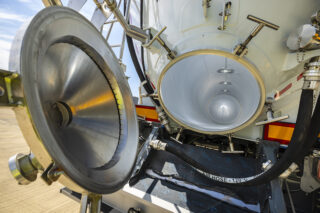
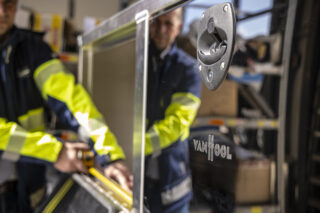
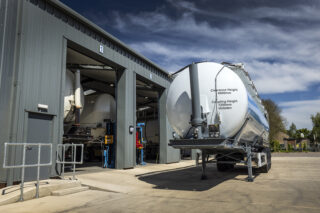
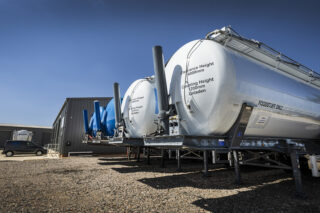
TANKER MANUFACTURER VAN HOOL HAS BEEN REJUVENATED AFTER A CHANGE OF OWNERSHIP, WITH AN EXPANDED PRODUCT RANGE, A NEW UK OPERATION AND AN EXTENDED RANGE OF SERVICES.
Van Hool Industrial Vehicles has built up an enviable reputation for its tankers, tank containers and container trailers over many decades. And following a change of ownership in 2024, it has now entered a new phase focused on investment, product expansion and long-term growth.
The tanker and trailer operation is now 52% owned by South Africa-based GRW Engineering with 48% held by German trailer manufacturer Schmitz Cargobull, while the firm’s former coach-building operation is now part of another group. GRW was founded in 1995 in South Africa by brothers Gerhard and Wentzel Van der Merwe along with another business partner, and has become a substantial manufacturer of tankers, silo tanks and other types of trailers. Based at Worcester, near Cape Town, it specialises in producing aluminium tankers, fuel and silo tanks along with a wide range of transport solutions, with an emphasis on durable but modern designs.
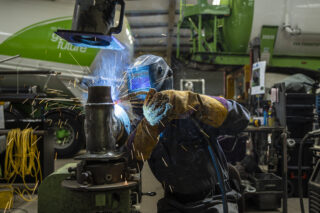
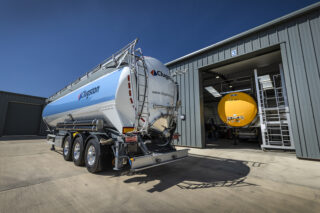
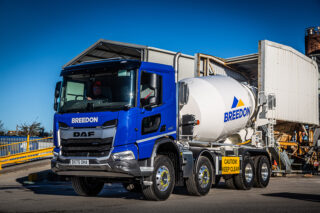
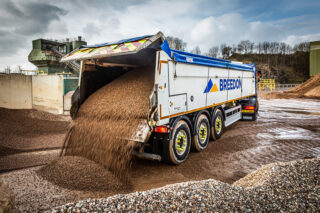
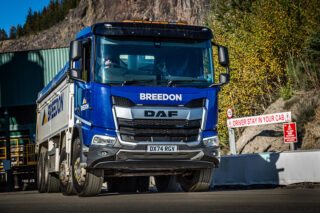
WITH MAJOR INFRASTRUCTURE WORK IN THE PIPELINE, BREEDON IS RAMPING UP ITS SCOTTISH FLEET AND LOOKING TO TAKE ON MORE DRIVERS.
Breedon is a leading vertically integrated international construction materials group in the UK, Ireland and the US, with more than 350 sites, 4,800 staff and group revenue of £1.7 billion. Its operational network includes more than 100 quarries, 50 asphalt plants, some 200 ready-mixed concrete plants and two cement plants.
To move all these materials, Breedon operates its own fleet of trucks alongside a franchise haulier and owner-driver scheme, allowing operators to run their own vehicles in its livery. In Scotland, there is an even split between Breedon’s company-owned trucks and contract hauliers, including those operating Breedon-liveried vehicles as part of the franchise scheme. Operationally, the fleet in Scotland consists of 8-wheel chassis cabs, including some tridems, fitted with tipper bodies or concrete-mixer barrels. There are also demountable trucks capable of switching between mixer and tipper bodies, based at more remote sites.

With 116 pages of first-class niche transport content, what more could you wish for? Click the appropriate link below to purchase your annual subscription, or an individual copy.
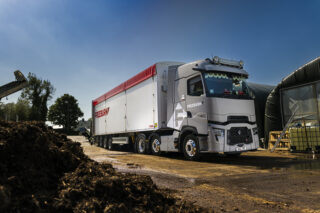
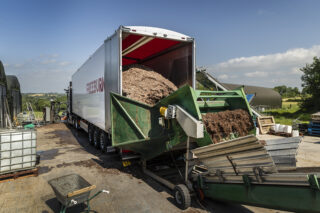
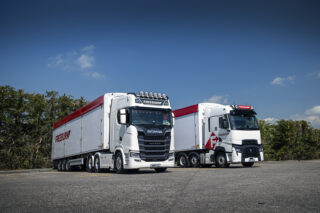
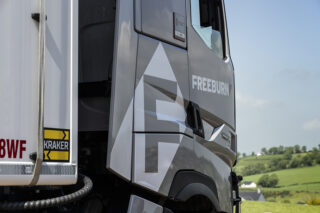
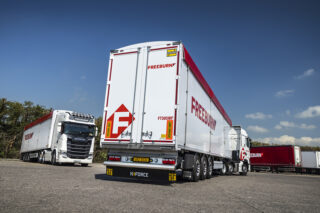
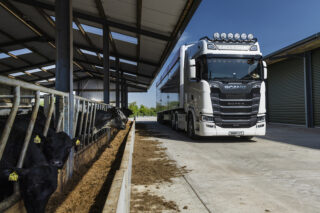
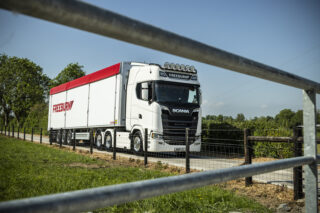
IN A DEPARTURE FROM CONVENTIONAL THINKING, NORTHERN IRISH TRUCK OPERATOR FREEBURN TRANSPORT HAS RECENTLY BEGUN USING 10 KRAKER MOVING-FLOOR TRAILERS TO HELP IT MOVE BOTH BULK AND UNIT LOADS ACROSS THE IRISH SEA.
Modern moving-floor trailers can carry all sorts of bulk loads as well as palletised goods, stillages, small containers and even large bales, making them well suited to operators with diverse types of work. And their ability to load and unload with minimal assistance is also attractive.
Despite their flexibility, many UK moving-floor operators still use them only for bulk cargo. But some do deploy such trailers on both bulk and unit load work, particularly in longer distance operations where the operator already has a wide range of regular loads. Obviously, the ability to carry different loads in one trailer can help overcome any imbalance in bulk work by making backloads much easier to find, improving efficiency and profitability.
With 116 pages of first-class niche transport content, what more could you wish for? Click the appropriate link below to purchase your annual subscription, or an individual copy.
